
下载 App


Atari games solved by Go-Explore
2021/03/22116 浏览综合
First return then explore
demo by Uber AI Labs, 2020-04-30
Explanation in video (https:// www.youtube.com/watch?v=EbFosdOi5SY), by Yannic Kilcher :
This algorithm solves the hardest games in the Atari suite and makes it look so easy! This modern version of Dijkstra's shortest path algorithm is outperforming everything else by orders of magnitude, and all based on random exploration.
[source code](https://github.com/uber-research/go-explore)
[full paper](https://arxiv.org/abs/1901.10995), last revised 26 Feb 2021
TL;DR
Model-free RL methods like policy gradients and Q-learning explore by taking actions randomly. If, by chance, the random actions lead to a reward, they are reinforced, and the agent becomes more likely to take these beneficial actions in the future. This works well if rewards are dense enough for random actions to lead to a reward with reasonable probability. However, many of the more complicated games require long sequences of very specific actions to experience any reward, and such sequences are extremely unlikely to occur randomly.
Montezuma’s Revenge Solved by Go-Explore, a New Algorithm for Hard-Exploration Problems (Sets Records on Pitfall, Too)
Problems with infrequent rewards are hard because random actions are unlikely to ever produce reward, making it impossible to learn. Montezuma’s Revenge is one such “sparse reward problem.” Even harder is when the rewards are deceptive, meaning that maximizing rewards in the short term teaches an agent the wrong thing to do with respect to achieving a much higher score overall. Pitfall is deceptive in this way, because many actions lead to small negative rewards (like hitting an enemy), so most algorithms learn not to move at all and as a result never learn to collect hard-to-get treasures. Many challenging real-world problems are both sparse and deceptive.
To be tractable in high-dimensional state spaces like Atari, Go-Explore needs a lower-dimensional cell
representation with which to form its archive. Thus, the cell representation should conflate states that are similar enough to not be worth exploring separately (and not conflate states that are meaningfully different). Importantly, we show that game-specific domain knowledge is not required to create such a representation. We found that what is perhaps the most naive possible cell representation worked pretty well: simply downsampling the current game frame.
Atari is resettable, so for efficiency reasons we return to previously visited cells by loading the game state. On Montezuma’s Revenge, this optimization allows us to solve the first level 45 times faster than by replaying trajectories. However, such access to the emulator is not required for Go-Explore to work; it just makes it faster.
With the downsampled image cell representation, on Montezuma’s Revenge Go-Explore reaches an average of 37 rooms and solves level 1 (which contains 24 rooms, not all of which need to be visited) 65 percent of the time. The previous state of the art [3] explored 22 rooms on average.
In this work, after the agent returns to a cell it explores simply by taking random actions (with a high probability of repeating the previous action). Note that such exploration does not require a neural network or other controller, and all of the exploration in the experiments that follow do not use one (although neural networks are used for robustification). That entirely random exploration works so well highlights the surprising power of simply returning to interesting cells.
The ability of an algorithm to integrate easy-to-provide domain knowledge can be an important asset. Go-Explore provides the opportunity to leverage domain knowledge in the cell representation (though the final neural network still plays directly from pixels only). In particular, we tested a domain-knowledge version of Go-Explore on Montezuma’s Revenge, wherein cells were defined as unique combinations of the x-y position of the agent, the current room, the current level, and the current number of keys held. We wrote simple code to extract this information directly from pixels.
With this improved state representation, Phase 1 of Go-Explore finds a staggering 238 rooms, solves over 9 levels on average, and does so in half the number of emulator steps vs. the downscaled image cell representation.
We believe Go-Explore performs so well on hard-exploration problems because of three key principles:
1. Remember good exploration stepping stones (interestingly different states visited so far)
2. First return to a state, then explore
3. First solve a problem, then robustify (if necessary)
These principles do not exist in most RL algorithms, but it would be interesting to weave them in. As discussed above, contemporary RL algorithms do not do number 1. Number 2 is important because current RL algorithms explore by randomly perturbing the parameters or actions of the current policy in the hope of exploring new areas of the environment, which is ineffective when most changes break or substantially change a policy such that it cannot first return to hard-to-reach states before further exploring from them. This problem becomes worse the longer, more complex, and more precise the sequence of actions required to reach a state is.


01:04
游戏服务器工程师入门
从事游戏服务器开发,需要这些知识储备,造作准备,早学习,为工作做准备
@User426888054
10:35
打工人VS资本家,游戏Demo详细介绍
游戏为策略游戏,玩家只需要把握时机召唤角色,释放技能。角色有自己的ai决策逻辑执行寻路、攻击、释放节能。
对现实职场进行讽刺。#发现好游戏
@风吹过的方向
1 赞
00:51
聚光灯第11天啦!新进展!
#TapTap聚光灯独立游戏 #聚光灯gamejam开发者日志 #TapTap
扔扔骰子,抽抽小霸鸽[心动小镇_点赞]
@希罗
9 赞
7 回复
01:26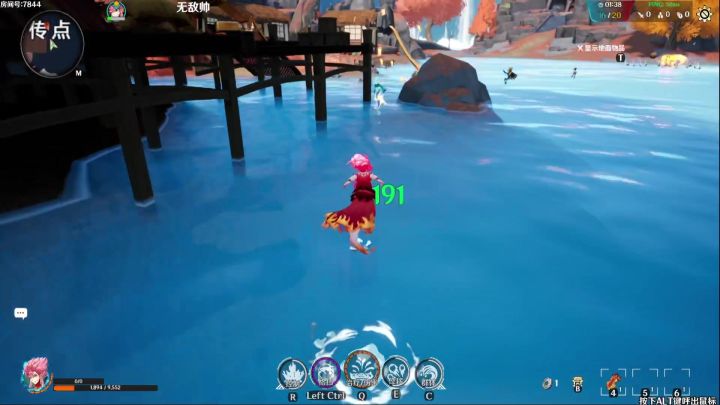
高燃 PVP 对决,每一秒都在极限拉扯!
你以为拼的只是手速?在《萍城异闻录》的战场里,硬核操作与心机博弈并存,高手过招,差一步就是生死之别!
华丽技能破空而来,浮空追击、闪避反打、魂卡瞬发,每一个动作都丝滑带感,打击感拉满!没有绝对的无敌,只有瞬息万变的战局 —— 前一秒你还在强势压制,下一秒对手就能用羁绊阵容逆转局势。
是莽夫硬刚,秀翻全场?还是老六埋伏,坐收渔利?在这里,没有固定套路,你的打法,由你定义!
搭配玩家打斗视频,近距离感
@夏目小小天

开发者日记(day 6)
#聚光灯gamejam开发者日志
自我介绍:我是一名大四毕业生,我学的专业是数字媒体艺术,只参加过一次Game jam,可以说这是正在做我的第一个游戏,我完全是一个小白,而我却打算单人solo,参加这次的活动也算是挑战自己了。
我要做的是一个多人联机扮演沙盒3D游戏。
游戏名称《我是布鸽》
世界观:(暂时)
布鸽为了去码头整点薯条,无意收到一个传单,被骗入一个黑公司,每天的重度压榨布鸽,让它产生
@Huan
6 赞
3 回复
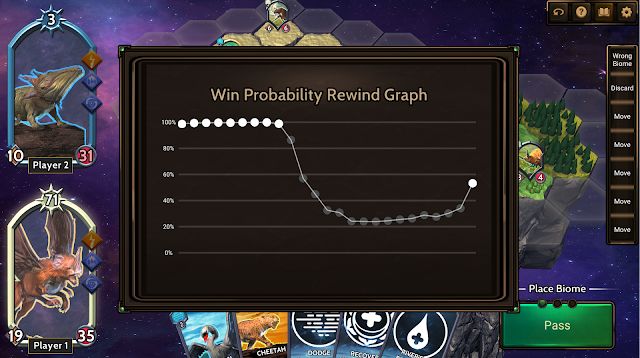
机器学习助力游戏开发:训练模型充当游戏测试人员,改善在线多人游戏的均衡性
Leveraging Machine Learning for Game Development | Google AI Blog
https://ai.googleblog.com/2021/03/leveraging-machine-learning-for-game.html
As an imperfect information card game with a large state s
@梯度
2 赞
1 回复

空骸
《空骸-黄昏坠落》是一款以重庆为原型、硬科幻为内核的近未来开放世界3A大作,以“宇宙轮回中的文明延续”为核心命题,打造了一套兼具本土烟火气与科幻史诗感的赛博朋克叙事。
玩家将以三个完全不同的视角,体验这个关于宿命、反抗与人性的完整故事:
第一个视角,是穿越者zhr——一名重庆渝中区的汽修职高学生,在一次课堂晕倒后,觉醒了来自未来的碎片化记忆。他来自无数个坍缩的平行宇宙,是无数次文明轮回中,唯一
@020探路者
2 回复
00:47
新游招募令-【创世纪】"命运眷顾勇敢之人!"
欢迎来到这片充斥着枪炮,细菌,与钢铁的土地,旅人。
在这里,世界正处于大争之世。驱动与链接钢铁巨兽的不是蒸汽,而是被湮灭的“信息熵”。人们通过魔晶这一工业奇迹开启了工业化的浪潮,第二次魔导革命于一战后的阵痛中开启,魔导工业技术于实践中爆炸式发展,也带来了不可逆的代价——世界正在枯竭,洋流遭到污染,现实的物理法则开始被人质疑,时序在魔导工业化的浪潮中逐渐崩坏,历史被人所遗忘,又以扭曲的方式重组,人与
@图灵零号机
1 赞
6 回复
30:01
“TapTap 制造” 发布,普通人也能制作游戏
没赶上发布会直播?这份回顾带你吃透所有干货!看 TapTap 创始人黄一孟如何玩转 AI 创作游戏~
@TapTap开发者服务
16 赞
4 回复

龙之谷启程手游丨战士新手加点攻略(剑圣分支)
一转分支:剑圣(爆发连招流,喜欢高输出选)定位:敏捷爆发、单体高伤、灵活连招,攻速快、打击感强,适合喜欢秀操作、打单体爆发的玩家。核心加点(15-50 级,优先满核心)
1. 必满核心(优先级最高)三段斩(满):突进 + 三连伤害,快速贴近 BOSS,连招起手月影斩(满):剑圣核心单体爆发,高伤 + 剑气,打 BOSS 主力技能。剑气共鸣(满):普攻附带范围剑气,持续输出拉满,清怪 / 单体都好用
@暴龙游戏测评2
1 赞